
Why High-Achieving Women Are Learning to Trust Themselves Again
By Dr. Tristina Anderson, leadership expert, award-winning author, founder of Unlock Your Power Within™ and creator of the Fearless Living™: No Regrets movementThere comes a point in many accomplished women’s lives when the external noise becomes louder than their own knowing.
Not because they lack clarity, but because they have learned to function in environments where constant input is rewarded - advice, expertise, data, opinions. Over time, the volume rises so gradually that they don’t notice when their own voice fades into the background.
We build careers. Raise families. Lead teams. Create businesses. We proven ourselves in rooms that once weren’t designed for us. And somewhere along the way, many of us became highly skilled at listening outward while slowly disconnecting inward.
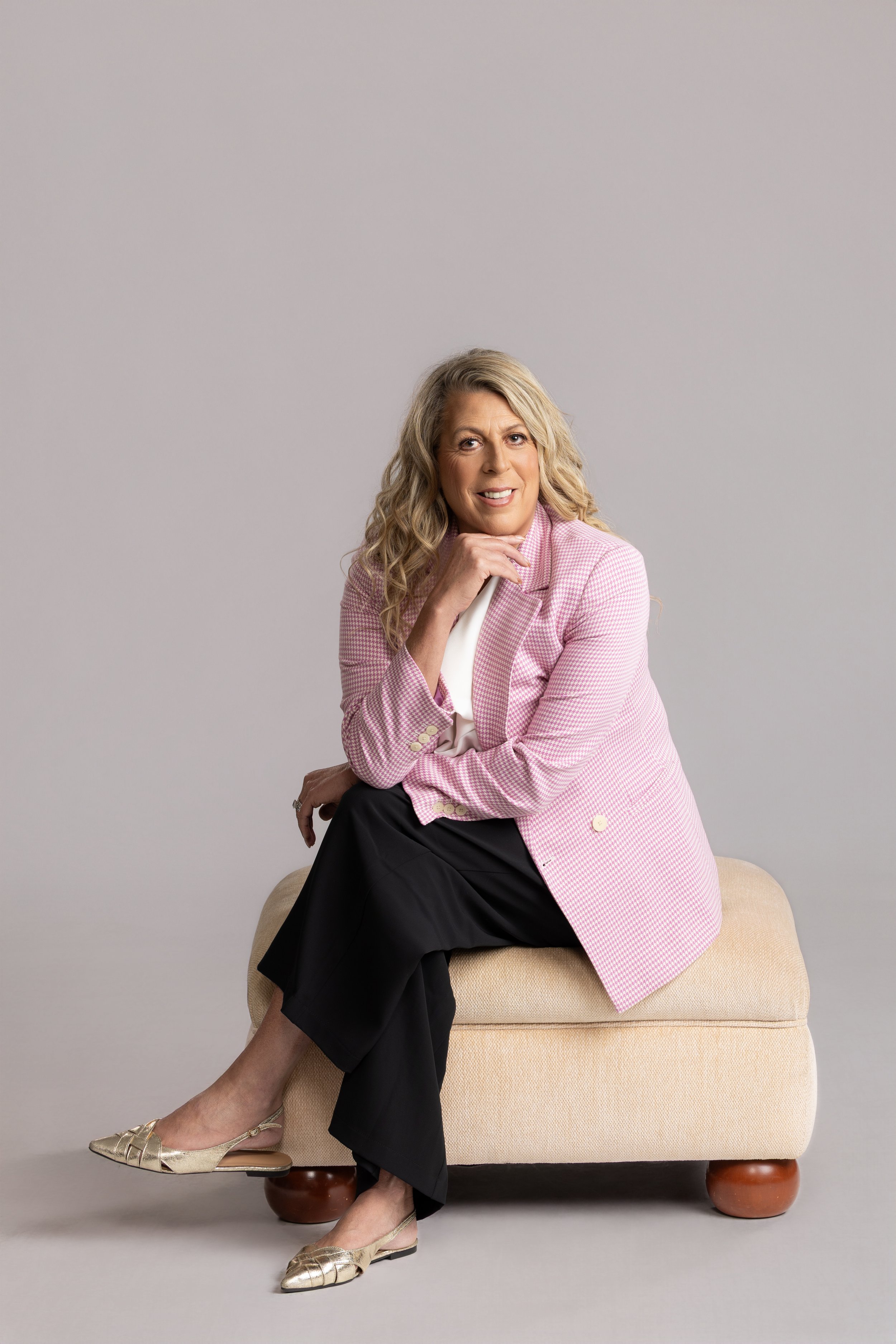
Photo: Dr. Tristina Anderson
I didn’t recognise this pattern in my own life until everything looked stable on the surface yet increasingly misaligned underneath. I was making responsible choices, meeting expectations and building something that appeared successful from the outside.
And yet a question kept surfacing:
Is this still the life I want to be living?
There was no spreadsheet that could answer that. No strategy could resolve it.
So I did something unfamiliar. I stopped.
I closed my eyes - not to escape reality, but to step back from the noise long enough to see more clearly. Instead of forcing a decision, I allowed my future life to come into focus - not as a five-year plan, but as a feeling.
That pause changed everything.
In the absence of constant input, something became undeniable: I already knew what I wanted. I just hadn’t been listening. Sometimes, you see more clearly when you stop looking outward.
Not long after that moment, I made a decision that surprised almost everyone around me. I moved to Mexico with my two school-aged children while launching a brand-new business.
From the outside, it looked disruptive and poorly timed. People questioned the logistics, the risk, the impact on my children. What they couldn’t see was that I had already visited my future in that quiet moment with my eyes closed. I had seen two paths.
One where I stayed in what was familiar - comfortable, predictable, and slowly disconnecting.
And one where I leaned into what I already sensed life was asking of me.
If I didn’t choose change, I would spend the next decade wondering who I might have become.
This wasn’t escape. I wasn’t running from something. I was moving toward myself.
From that point forward, how I made decisions shifted. I stopped polling opinions. I stopped over-explaining. I stopped waiting for consensus - not because other perspectives lost value, but because my own perspective finally took its rightful place.
At the heart of it was one simple truth: I didn’t want to live with regret.
Not the dramatic regret that comes from risk, but the quieter kind that accumulates when you ignore what matters most. I had begun to feel it in subtle ways - racing through days that were productive yet emotionally thin, telling myself there would be more time later.
But later isn’t guaranteed.
When I slowed down enough to listen, I saw how easily years could pass in familiar routines while the life I wanted waited patiently in the background. Many of the barriers I believed existed - timing, responsibility, practicality - dissolved the moment I stopped viewing my life through external expectations and began seeing it from the inside out.
Choosing Mexico wasn’t just a relocation. It was a declaration - a decision to reclaim presence with my children, to honour what I already knew and to choose a life I wouldn’t have to question later.
Living without regret isn’t about fearlessness. It’s about being honest.
High-achieving women are exceptionally capable. We are trained to assess risk, evaluate options and think several steps ahead. These skills serve us powerfully in business and leadership. But applied indiscriminately to our personal lives, they can become a barrier rather than a strength. Eventually, analysis doesn’t create clarity - it delays it.
I see this pattern constantly: intelligent, competent women who can lead complex initiatives without hesitation, yet feel strangely immobile when it comes to their own lives. Not because they lack insight, but because trusting themself feels riskier than trusting consensus.
That’s the hidden cost of being highly capable. You become so adept at relying on systems, structures and external validation that you forget how to rely on yourself.
Most women were never taught to trust their inner voice. We were taught to be responsible, appreciative and adaptable. Intuition could be dismissed as impulsiveness; wanting more could be mistaken for ingratitude. So we learned to succeed in environments that rewarded performance over presence.
Over time, achievement replaced alignment. And when that happens, life rarely collapses - it begins to feel blurry. Not wrong. Not broken. Just unclear.
That blur is often mistaken for confusion. In reality, it’s transition.
When I say I learned to see better with my eyes closed, I mean that I stopped trying to solve my life the way I solved business problems. Instead of chasing certainty through more effort, I slowed down long enough to ask different questions:
Does this choice expand me or contract me?
If no one were watching, what would I choose?
These aren’t emotional questions. They are leadership questions. Because clarity doesn’t come from more information; it comes from discernment - from integrating lived experience instead of overriding it. And discernment requires stillness.
When I finally allowed myself that space, the answers arrived calmly. I didn’t need new strategies. I needed to trust my own perspective. Once I did, decisions became simpler. Not easier, but clearer.
If this resonates, it’s likely because you’ve felt it too. You’ve sensed when a chapter was closing long before the world could see it. You’ve felt the tension between what looks successful and what feels true.
This isn’t about reinvention. It’s about remembering how to listen.
High-achieving women rarely struggle with capability. They struggle with giving themselves permission to trust their clarity. And the most meaningful shifts don’t come from doing more, fixing more or proving more. They come from pausing - from stepping back instead of pushing harder.
Sometimes that simply means closing your eyes long enough to hear yourself again. Not to escape your life, but to finally see it.
Because the woman you are now already understands what comes next.
You just have to let her lead.
