
How to Fuel Creativity, Find Balance and Stay Inspired
By Emmi Salonen, creative director and educator, celebrating 20 years of her London-based Studio EmmiThere was a point in my life when I lost touch with a lot of who I was, and what brought me joy. I was burned out.
Since starting university, I hadn’t stopped. I graduated with my Graphic Design BA from University of Brighton in the UK, then moved to Italy to work at Benetton’s Communication Research Centre, Fabrica. From there, I moved to London, then New York, to work at design studios with some of the world’s biggest brands as their clients. Before long, I set up my own design practice, Studio Emmi.
From the outside, my career had all the hallmarks of success. I was channelling my creativity into work that mattered, and getting the opportunity to work on a constant stream of varied, intellectually stimulating projects. But I started noticing a new level of exhaustion after work each day. I stopped seeing my friends and started neglecting exercise. Over weeks that became months, I realised I felt increasingly unwell. More worryingly to me, I realised that I no longer wanted to create. The spark was gone – the thrill of new ideas felt like a distant memory.
Frightened, I thought: If I’m no longer a creative, who am I?
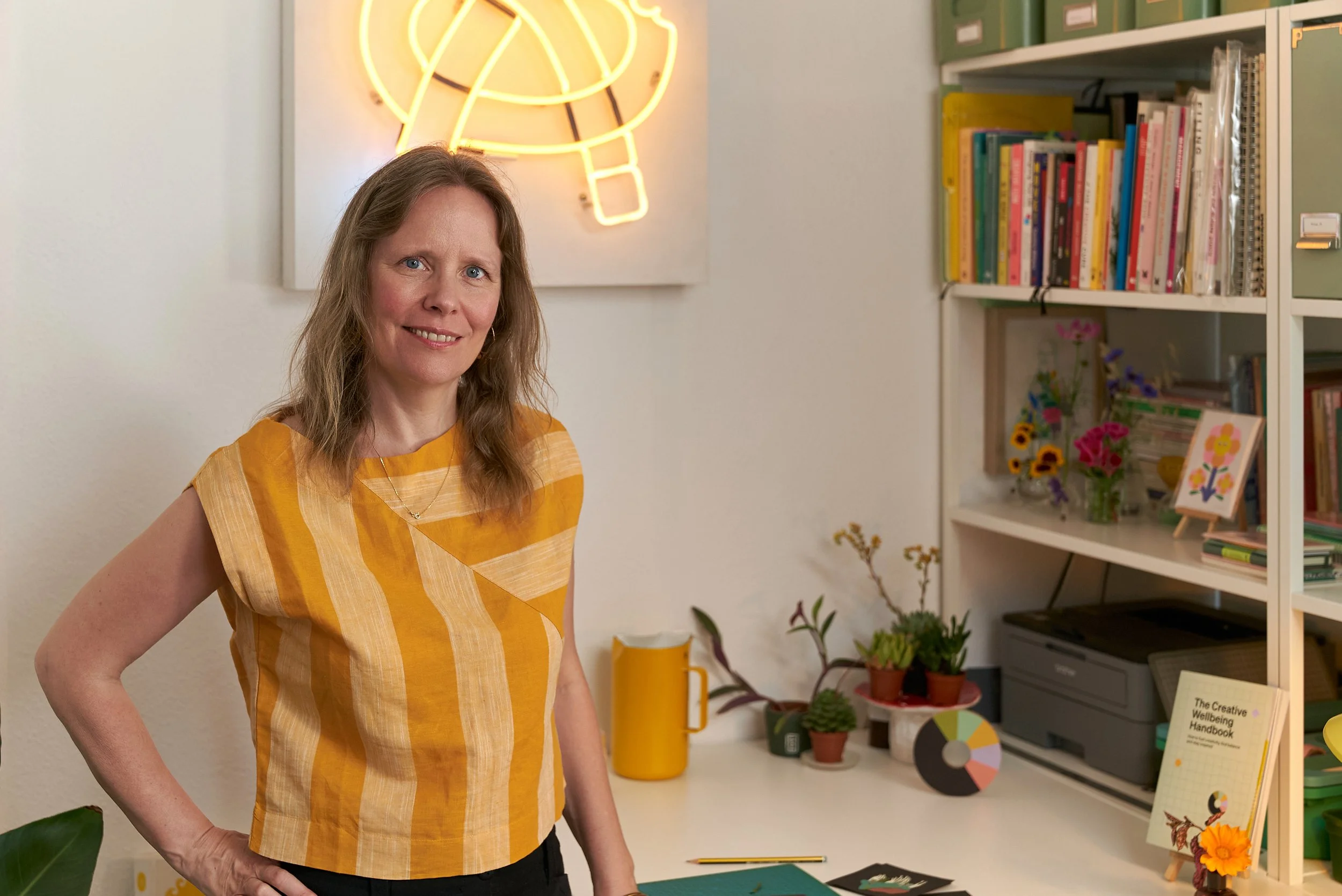
Photo: Emmi Salonen
How did my light get so low? Why do others – a worrying 70% of creatives – suffer the same dimming of their spark?
These questions took me all over the world – and, eventually, right back to my design studio. Happily, creativity is a flame that can be diminished, but not extinguished.
The Creative Ecosystem model
The answers began revealing themselves to me on a long solo trip to connect with and learn from creative people in different places, from different cultures. My journey across continents took me to unfamiliar landscapes – to the volcanic Marquesas Islands in French Polynesia, where it takes only a small leap of imagination to see dinosaurs roaming; on a pilgrimage to Shashamane in Ethiopia; to the striking Pink Sea of Colombia; and to Norway’s turquoise Arctic waters.
It led me to my childhood Finnish archipelago forests, where I spent weeks at a time exploring my home, seeking the unfamiliar in the familiar. I noticed how mushrooms had sprung from fallen pine trunks, breaking them down to nourish the forest floor, where wood mice foraged for food in the blankets of moss. A woodpecker pecked at a pine cone, gathering seeds and scattering the forest’s future. I saw that nothing lives in isolation, rather, every creature depends on many others for food, shelter, procreation. Each being takes, and gives.
I realised that creativity, too, exists as part of a bigger web. It is a force that can feed us, but must also be fed.
I began to form a new concept: the personal Creative Ecosystem. What inputs does a creative person need to keep their ecosystem in balance? What support, resources and opportunities will feed them?
It is these questions that my new book explores, and helps you answer for yourself. For creatives, the demand for output can be constant. It’s not often that we take the time to pause and give ourselves the inputs we need.
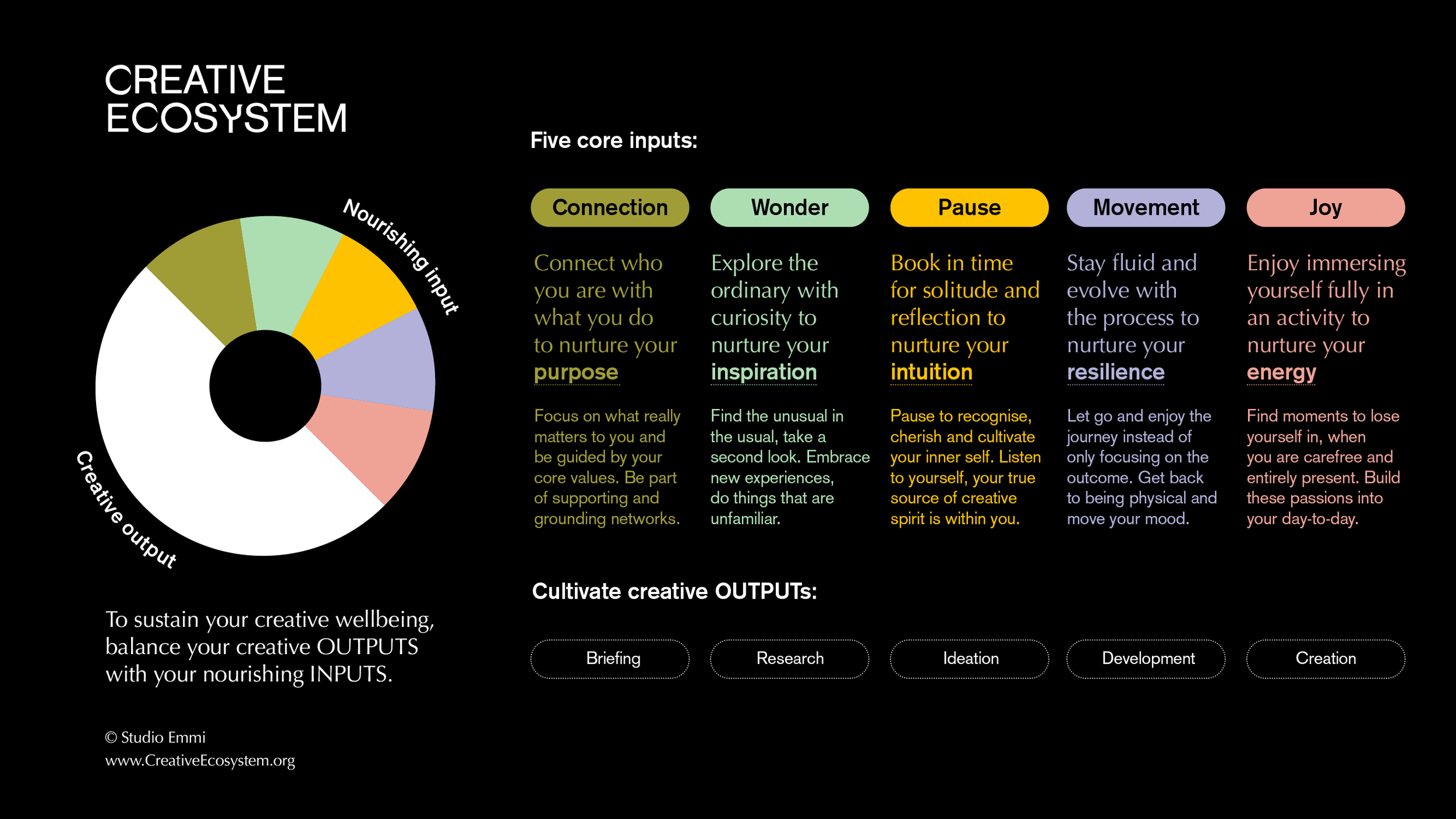
The Creative Ecosystem model is a way to think about what balance looks like for you. It covers five areas that act as fuel for creativity: Connection, Wonder, Pause, Movement, Joy. The experience of each of these – their source, their importance, their availability – is as unique as your creativity.
Creative Ecosystem prompts
Connection
Connecting who you are with what you do strengthens your sense of purpose.
• What really matters to you?
• What does being successful mean to you?
• How do you stay connected to people who inspire and support your creativity?
• What does your ideal day and life look like?
Wonder
Exploring the ordinary with curiosity gives you inspiration.
• What inspires you?
• What is the most interesting thing around you right now?
• How would you structure your day if you could plan it entirely around your creativity?
• What would you like to learn?
Pause
Book in time for solitude and reflection to tune into your intuition.
• Do you do any activities alone, to allow some time for deep thinking and reflection?
• What is the last thing your intuition told you?
• What small habit has had a big positive influence on you?
• How could you be a little kinder to yourself right now?
Movement
Stay fluid and evolve with the process to build resilience.
• Are there any negative phrases you repeatedly tell yourself?
• Do you allow both pleasant and painful thoughts and feelings to flow freely?
• What helps when you feel anxious or overwhelmed?
• Have you given your body time to move?
Joy
Feeling joy and immersing yourself in the process gives you a source of energy.
• How do you get into the flow?
• What were you doing when you last lost track of time?
• When did you create something purely for the joy of it?
• Where and when do you do your best thinking?
Extract from The Creative Wellbeing Handbook: How to fuel creativity, find balance and stay inspired by Emmi Salonen (BIS Publishers).
