I Packed 255 Orders Alone. Here's What It Taught Me About Growing a Small Business
Jennifer Marks was writing cheques for her mother's food business by the age of 11. Decades later, one appearance with creator Funky Dineva sent 255 orders to her own brand, The Clean Theory Candle Co. Here she writes about what that taught her about growth, and why the next stage means more help.
I grew up with what I jokingly call a boomer mentality: get a good job, get married, have children, work until retirement and, well…die. It sounds grim when you put it that way, but for my generation, particularly those of us raised by parents who prized stability, there was a very clear blueprint for what a successful adult life was supposed to look like. I followed much of it. I built a career in the federal government, got married, raised four children and created a stable life. What I didn’t realise until much later was that entrepreneurship had been woven into that life from the beginning.
What my mother's food business taught me by the age of 11
My mother was fiercely independent and believed deeply in her talent for making delicious food for the public. She ran a family food business, and she didn’t shield me from the business side of it just because I was a child. By the age of 11, I was making runs to the bank, filling out deposit slips, writing cheques and organising receipts for end-of-year taxes. I didn’t know I was receiving an education in entrepreneurship. I just knew my mother had a business and there was work to be done.
When the business is ready but you can’t do every job alone
Decades later, those lessons followed me into The Clean Theory Candle Co. Recently, an appearance with creator Funky Dineva resulted in 255 customer orders. I was prepared for them. I had spent years learning my products, managing inventory, figuring out shipping and building systems that could handle growth. What I wasn’t fully prepared for was how physically gruelling it would be to fulfil that volume of orders by myself.
One thing that's important to understand about my business is that I do everything myself. And when I say everything, I mean everything. I make the products, manage inventory, maintain the website, handle customer service, process the orders, pack every box, print every shipping label and get those orders out the door. I don't have employees or a fulfilment team behind the scenes.
There is nothing glamorous about standing for hours packing order after order, checking products, printing labels, assembling boxes and making sure the 200th customer receives the same care as the second. I was exhausted, but I was also incredibly proud. Those orders taught me that being ready for growth isn’t always about whether your business can handle the demand. Sometimes the business is ready, but growth reveals that the person behind it cannot, and probably should not, continue doing every single job alone.
How to prepare for an order spike when you do everything yourself
Preparing for an order spike isn't only about having enough inventory. You also have to have a plan for the labour that comes after the sale. Here's what got me through, and what I'll do differently next time.
1. Build inventory before you think you need it
One thing that saved me was having finished product already made and cured. With candles, I can't simply make one today and ship it tomorrow, so inventory planning is critical. If you know you have an opportunity for major exposure coming, make more of your proven bestsellers than feels comfortable. An order spike is not the time to discover that you only have 20 units of the product everyone wants. So, stockpiling saved me.
2. Have your shipping station ready before the orders arrive
Boxes, mailers, tape, labels, inserts and protective packaging should already be in the building and organised. You don't want to be running out to buy shipping supplies while hundreds of orders are sitting in your system. I had my shipping set-up in place, and that absolutely helped me get through fulfilment.
3. Know your production capacity, not just your sales capacity
Getting a lot of orders sounds amazing until you realise that every single order has to be picked, packed, labelled and shipped. I was prepared for the sales; I underestimated the physical workload that came afterwards. That distinction was probably my biggest lesson. Because I had a surplus of product, no order was held up waiting on stock, and fulfilling was drama-free. The hardest part was the sheer number of hours it took.
4. Create an assembly-line system
When you're doing everything yourself, even small steps become enormous when they're repeated hundreds of times. I learned very quickly that batching tasks is much more efficient: organise the orders, pull products together, prepare packaging, pack, label and then stage everything for shipping, rather than completing every order individually from beginning to end. Next time, I'll save even more time by having my boxes pre-assembled.
5. Know ahead of time where you'll accept help
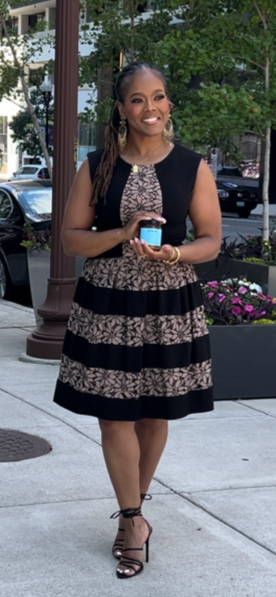
Photo: Jennifer Marks
I still run every part of my business myself, but that experience showed me exactly where I would bring in temporary help during another major surge: fulfilment. I don't necessarily need someone permanently working in my business, but if another 200-plus orders hit at once, I now know there is no prize for packing every single box myself. I can maintain control of my products and my brand while getting help with repetitive fulfilment tasks. But asking for help is a struggle for me. My name is on this company, and quality control matters to me.
What I'm carrying forward
That experience also made me think differently about the business lessons I learned from my mother. At 11, I saw a woman who believed her talent had value and wasn't afraid to turn that talent into income. What I didn't understand then was how much work existed behind what customers saw. Now I understand it intimately. The product may be the thing people fall in love with, but the business is everything that happens after someone decides to buy it.
At 49, I’m also questioning parts of that old blueprint I inherited. I still believe in hard work, responsibility and stability. Those values have served me well. What I’ve let go of is the idea that there is an age by which your biggest ambitions should already be behind you. I’m not waiting for retirement to begin imagining another version of my life. I’m building it while still working, raising a family and carrying all the responsibilities that come with both.
Those 255 orders didn’t teach me that I wasn’t ready for growth. They proved that I was. But they also showed me what the next level will require: better systems, more help and a willingness to stop equating doing everything myself with doing everything well. Maybe that’s the biggest lesson I’m carrying forward. My mother taught me how to work. Now I’m learning how to build something that can grow beyond the limits of my own two hands.
So when those seemingly insurmountable orders come in, put The Golden Girls on in the background and GET TO WORK!