Why We All Need a Digital Detox
Mia Hadrill built an off-grid retreat with no WiFi, no phone signal, and no mains electricity because she needed it herself. The founder of Aim Agency on always-on culture, what it’s quietly costing you, and why putting the phone down might be the most strategic thing you do today.
In the early days of Aim Wild, we were off-grid in every sense. After a weekend working at the retreat, without phone signal, mains electricity, or even hot water, I would leave feeling better than I had in months. Away from every comfort I usually relied on, I was somehow recharging faster than ever.
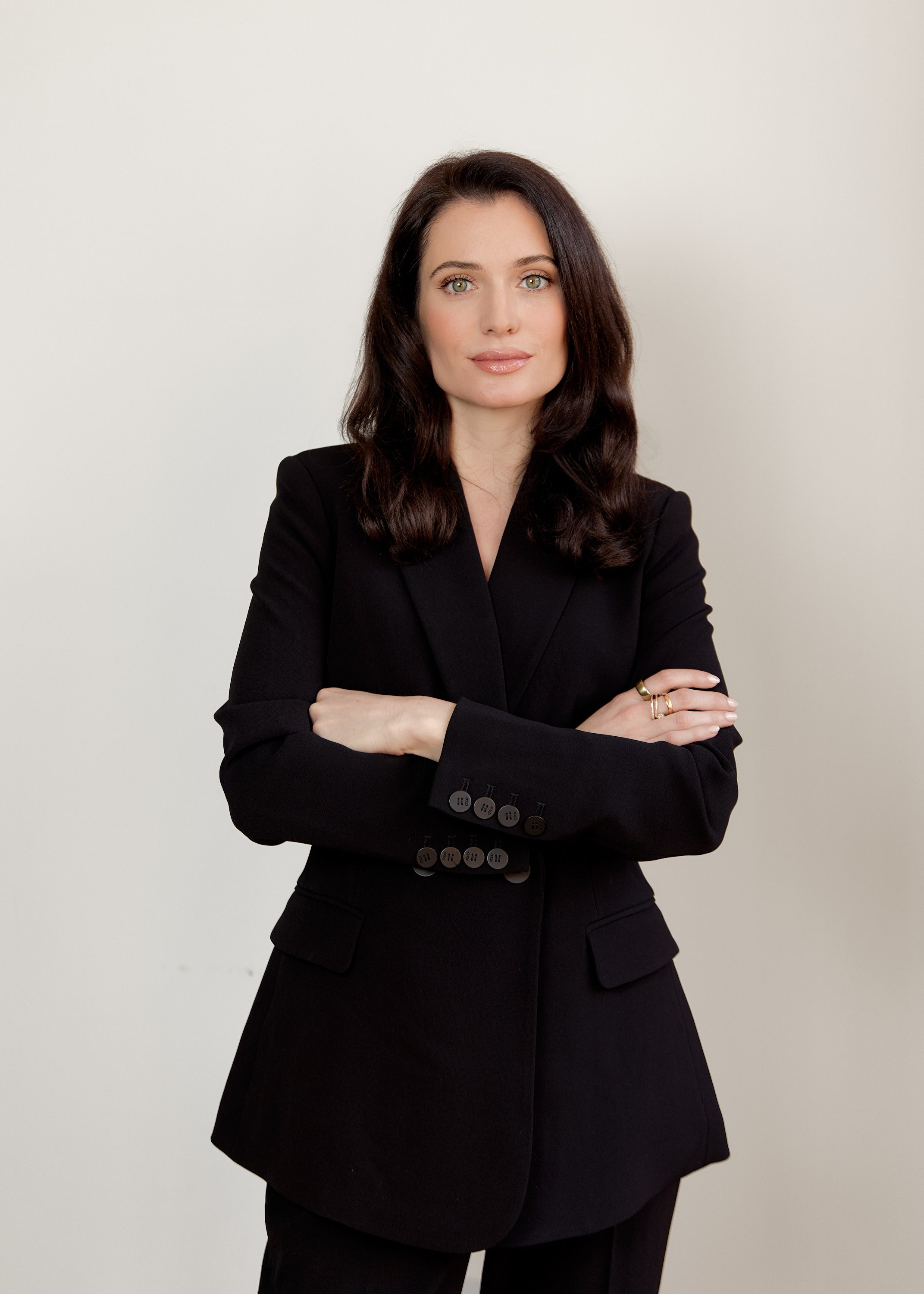
Photo: Mia Hadrill
Ask anyone in business how they are doing and, nine times out of ten, the answer involves being extremely busy. It’s built into the very meaning of the word “busyness”. We are relentlessly overstimulated by screens, forever behind on the next update, always on.
As founders, we wear this like a badge. But while the technology that we use all day, every day is genuinely remarkable, it was not created with our well-being in mind. It was built to keep us engaged. Somewhere along the line, technology that was originally designed to make us more productive started to make us feel overstretched and exhausted. Add to that the additional pressure on women in business to look neat and tidy, and you have a perfect storm. With all of this weighing on us, the pull of nature, the urge to step away from it all, to stand at the top of a hill surrounded by greenery and long views, becomes incredibly strong. I know this feeling well. I’d bet that most founders do.
That is a big part of why I co-founded Aim Wild, an off-grid digital detox retreat in the Welsh wilderness. There is no WiFi, no mains electricity, no phone signal in the barn, no television and no light pollution. Thankfully, there is now hot water. Guests spend their stay surrounded by some of the UK’s most untouched landscapes. It is not glamping with fairy lights; it’s a more deeply restorative experience, because I believe that stepping away from screens is not a luxury but a necessity.
The problem with always being on
“Always-on” culture has become so normalised that many founders don’t even realise they are caught in it. There is this preconceived idea that availability proves commitment. So we answer the late email, we check the phone before sleep, and we convince ourselves that one more scroll is somehow strategic. It is the nature of our work at Aim Agency to be entirely committed to our clients, and with many of them being based around the world, we simply have to be tuned in at all times. So the answer is about balance: to be reachable and tuned in to our clients whenever they need us, but when we have the opportunity to block off a moment for a digital detox, we have to truly honour it.
I really believe in honouring people’s time. Whenever a member of the team at Aim is on leave, I make sure the rest of the team does not contact them for work matters while they are away, to honour their rest and to give them a proper opportunity to disconnect. I want them to come back fully refreshed.
Burnout doesn’t just happen; it gradually builds. Decision fatigue is real. Founders make hundreds of decisions a week, and without proper recovery time, the quality of those decisions erodes, often before you even notice. When your business is your creation, switching off can feel like neglect. But I have seen it enough times to know that constantly pushing through is not what real dedication looks like.
Burnout is a risk to you, your team, and everything you have built. Disconnecting is not selfish. It is actually one of the more responsible things you can do as a leader.
Creativity needs quiet
I swim every week because it is one of the few activities that demands my complete attention. You cannot be on your phone in a pool; you cannot multitask. For that stretch of time, your brain is released from the constant influx of information, and I always find that I come up with better ideas in that space. I would compare it to meditation, a moment entirely to yourself and your thoughts.
If you are waiting for inspiration to strike while you sit in an office, between thirty unread emails and a Zoom meeting, you will be waiting a long time. The best ideas rarely arrive at a desk. Our brains just don’t work that way. I recently read about the default mode network, which is the part of the brain responsible for creative thinking and connecting ideas. The default mode network can only properly switch on when you are not actively focused on a task. In the corporate world, we are so busy being busy that we’ve forgotten how to actually think.
Constant connectivity keeps you stuck there. You are always responding, reacting, but never actually creating. For a founder, that is where the real damage is done. Your job is not simply to manage the noise; it is to lead through it, to have vision and inspire the people around you. You can’t do any of that well if you never come up for air.
Presence is a leadership skill
When founders are visibly distracted, the rest of the team feels it. Your team takes its cues from you. If you are always half-elsewhere, that becomes the standard. If you protect your focus and model what it looks like to be genuinely present, that becomes the standard instead.
Through Aim Agency, I get to work with some of the most driven, inspiring and ambitious leaders, and the ones who sustain that over the long term all have one thing in common: they have found their own way to step back and reset, to properly reconnect with what they are building and why. Whether it’s a long walk, a regular trip to a remote place, or a morning without a screen, the ritual itself matters less than the intention behind it. The goal is to show up as the clearest version of yourself, for your team, your clients, and your business.
Small habits make a big difference
You don’t need to go completely off-grid (though I would highly encourage it!). The changes that make the biggest difference can be simple. Implement a tech-free morning routine. I’ve found that a lockbox can be very helpful if you need a tough-love approach. Step away from your desk for lunch without your phone. Commit yourself to one weekly activity: swimming, a sauna, dancing, something that pulls you entirely into your body and away from any screens.
These small habits done consistently have a huge impact. You think more clearly, and your relationships, both professional and personal, feel more genuine. You stop showing up on autopilot, and you start being more present, which is more valuable than most people realise.
Technology should serve you, not control you
I am not anti-technology. Aim Agency was originally built on a single laptop in my living room. We use technology every day for our work. But I think it is worth being honest with yourself about how much you actually need it, and how often.
Aim Plastic Free, the campaign I founded to reduce single-use plastic, started from the same instinct: that what we consume, whether plastic or screen time, should be a conscious choice. The goal is to use objects with intention, really thinking about what they are and how they benefit you, rather than using them for sheer convenience. When you start thinking twice about the things you use and their impact on your health, whether it be your phone or plastic water bottles, you find ways to cut down on your daily use, and you feel better in the long run.
The founders who will lead well over the long term are not the ones who are most available at all times. They are the ones who have learnt when to switch off to protect their mental bandwidth, and who understand that the quality of their thinking is one of their most valuable business assets.
The most important thing you can do for your business today might just be to put the phone down. You built something worth leading well. Give yourself the space to actually do it.