
Vendor or Visionary? The Question The Devil Wears Prada 2 Raises for Every Female Founder
"You're not a visionary, you're a vendor." Shannon Kate Murray, founder and editor of High Flying Design, argues that line is the question most female founders are already answering wrong every time they describe what they do.
Spoiler warning: this piece discusses key plot points from The Devil Wears Prada 2.
There's a scene late in The Devil Wears Prada 2 where Miranda Priestly, the editor-in-chief of New York fashion bible Runway, finally calls her former assistant Emily Charlton out. Emily, now a senior executive at Dior, has been secretly engineering a takeover of Runway, planning to install herself as editor and push Miranda out for good. It's a long-running grudge wearing a rescue plan. When Miranda turns to her, she explains:
"You're beautiful and intelligent, but no, you don't have what it takes [to step into her shoes as Editor-in-Chief]. I'm sorry. But you're not a visionary, you're a vendor."
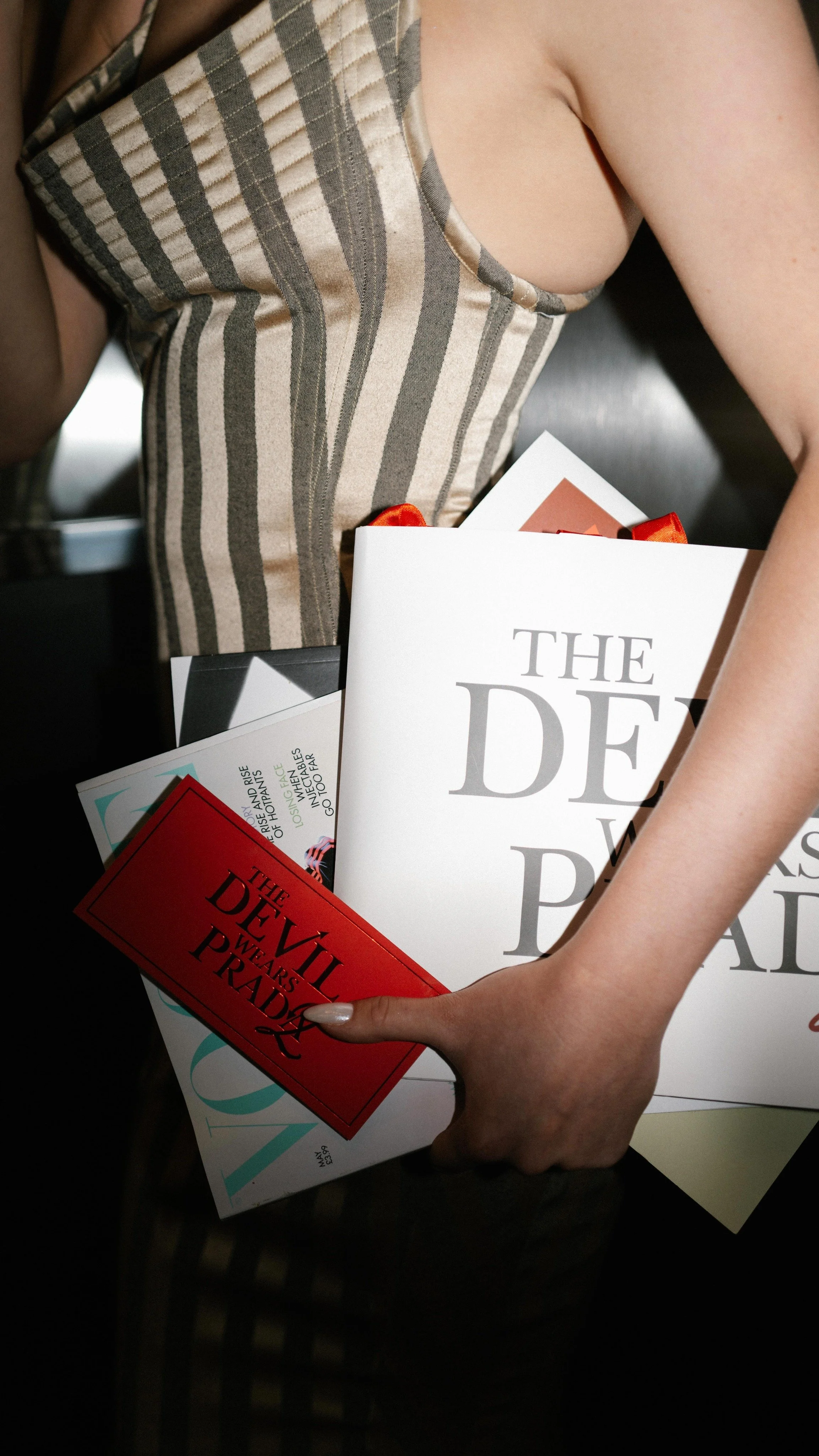
It's the line I found myself thinking about on the drive home from the cinema. I have a funny feeling I’m not the only one, it was a gold!
A vendor, as per the Oxford English Dictionary, sells. While a visionary has original ideas about what the future could be. Both are valid. Both are real categories of work. The film makes the contrast literal: Dior, where Emily works, buys ad space in Runway. Miranda has shaped Runway editorially over decades. Emily has the resources. Miranda has the point of view.
In the real world, most founders are both. You're selling something; that's how the bills get paid. But you're also shaping how the work in your corner of the world gets done, and that's why anyone chose you in the first place.
The question isn't “which one am I?”; it's “which one am I leading with when I describe what I do?”
Most women lead with the vendor half. Often with a “just” in front of it, for good measure.
“I’m just a hairdresser”
It’s the phrase I hear most often when I interview founders for High Flying Design’s Founder Stories column. A recent example: Mollie Barnard, who runs a fully booked salon out of a building her parents built in her Essex garden, told me she'd been up the night before worrying about what she could possibly say. "I'm just a hairdresser," she opened with. She has 160 loyal clients with no space for more. A growing waitlist. Weddings booked every fortnight in season. She’s a Davines stockist. She built something that didn't exist before, with a clear point of view about how it should feel. By any honest measure, that's visionary work. She still opens with “I'm just a hairdresser.”
The “just” is the whole problem. It tells the listener they're allowed to underestimate her. So naturally, they will.
The self-promotion penalty is real
There's a body of research on why women do this, and it isn't humility. The Rutgers psychologist Laurie Rudman first identified what's now called the self-promotion penalty in a 1998 paper in the Journal of Personality and Social Psychology. In her experiments, women who self-promoted were rated more competent than women who softened themselves on purpose, but they paid for it: they were rated less likeable, and less hireable. Self-effacement made them more pleasant to be around, but also less likely to be chosen for the job, the promotion, or the project.
The cost of safe language is that the world treats you safely.
You become more interchangeable than you are. You compete on price because you've given clients no other reason to choose you. Eventually, you watch someone with half your skill build the brand you should have built, because she was willing to talk about her work in visionary terms, and you weren't.
The shift is smaller than it sounds
Vendor version: “I help small businesses with their websites.”
Visionary version: “I build the digital foundations small businesses need to become real brands.”
The first frames you as one of many. The second frames you as the person to come to when the reader wants the specific outcome you're describing.
Now write yours. What’s the vendor version of what you do? And what’s the visionary version?
The exercise isn't to invent something new. It's to communicate the bigger picture of what you already do. If it feels presumptuous, that's the right feeling. It usually passes by the second time you say it out loud.
What changes when you do? The clients who arrive already know why they're there. Pricing conversations get shorter. “Can you do it cheaper?” gets replaced with, “Can you start sooner?”
You absorbed the underestimating somewhere
Look at how the film treats Emily. The damage didn't start when Miranda said the vendor line out loud. It started years earlier, when Miranda pushed her out of Runway and into the job at Dior. Emily has carried it ever since. The takeover plan is essentially Emily trying to prove Miranda wrong. By the time the verdict gets said to her face, she's already been hearing it in actions for years.
The voices that teach you to shrink aren't often strangers. They're family members, mentors, the role models you patterned yourself on. You patterned yourself on someone's view of the work, and someone's view of you. You absorbed the underestimating somewhere. Now you do it to yourself.
I'm not writing this from the outside. I was told for years that what I was building could never be a real job. Not by strangers. By people I loved, who loved me back, who genuinely didn't see what I was doing as the thing it was. "An online blog isn't a real job." I heard versions of that line all through my late teens and into my early twenties. But I'm publishing this in the magazine I built anyway. The hardest part wasn't the work. It was deciding I was allowed to call it what it actually is.
Vendor or visionary, and the years it costs
Towards the end of the film, Miranda realises that Nigel, who has been at her side since the first film twenty years earlier, has been waiting to lead the whole time. She kept him in the role she first cast him in, and never updated the picture. Not until circumstances forced her to ask for help.
The years you live don't return. No one wins by living out the smaller version of themselves that someone else decided was the real one.
It's your job to make sure you aren't mistaken for a vendor, even when the people around you keep doing it. So if you've spent the last few years putting the word "just" in front of what you do, that's the place to start.