
Dina Humphreys on 27 Years of Déjà Vu Hair Studio: "I Never Planned Any of It"
Dina Humphreys has run Déjà Vu Hair Boutique on Coppins Road in Clacton-on-Sea for 27 years. She lived opposite High Flying Design's editor Shannon Kate Murray when Shannon was growing up. To Dina, it was just her job. To Shannon, she was the first female founder she had ever seen.
Dina Humphreys never planned to run a hair salon. She fell into hairdressing, was encouraged into ownership by her husband and sister, and took it on at 33 with three young children at home and no grand vision for what it might become.
Twenty-seven years later, Déjà Vu Hair Boutique is still on Coppins Road. In 2023, readers of the Clacton and Frinton Gazette voted Déjà Vu the best hairdressing salon in north Essex.
Over coffee in Costa, she shared what those 27 years have really looked like.
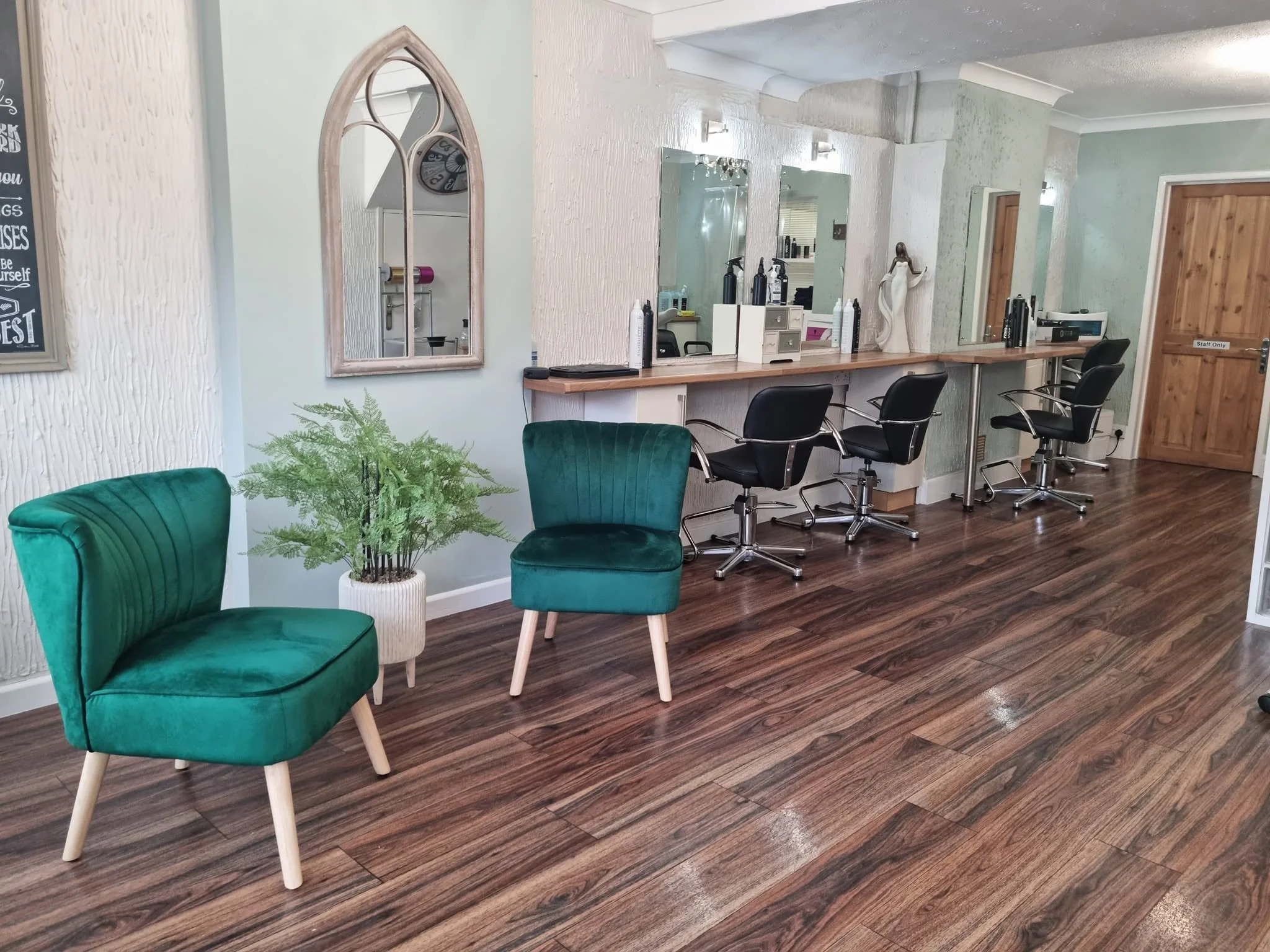
Photo: Déjà Vu Hair Boutique in Clacton-on-Sea
Your mum was a hairdresser. Did that put you off?
DINA: It's really weird. I never wanted to be a hairdresser. My mother was a hairdresser, so that was the last thing I wanted to do.
While I was still at school I used to work in hotels because you could get that kind of work quite easily, but it was only seasonal and I wanted money all year round. My godmum’s daughter got me a job at the hair salon where she was working. So that's how I ended up there.
I was very easily distracted at school, talked far too much. Look at me now, I've got a job where I can talk all day long. Worked out perfectly really.
When I left school I got offered an apprenticeship at the salon and ended up taking it. I loved the training, loved the hair. But I had somebody who trained me who was unkind, which made me really mindful of how you treat people. I can remember where I worked, they had two shops and I did six months in one and six months in the other. I absolutely loved one and hated the other because of this particular person. Many times I went home and cried. My mum said, even if you just finish your apprenticeship, it's something you can use later on. She was my biggest supporter at that time. So I finished it.
How did you go from working there to owning your own salon?
DINA: After my apprenticeship I got a job at another salon, where Sue was my boss. I loved it there. Eventually Sue moved on and sold up, and I carried on working elsewhere, got married, had children. For a while I was working in the school kitchen. I loved it but it was hard work having three jobs with three young children.
That’s when Sue got back in touch. We'd stayed close over the years and she suggested we take on a lease together. I didn't really know if I wanted to do it. I wasn't very confident. But my husband and my sister were really encouraging, they were like, just do it. like, just do it. It wasn’t a burning ambition of mine, but with their encouragement I went for it.
After about six years she wanted out, so I bought her out and took the business on my own. A lot of people thought I wouldn't do it. And I'm not very confident but I'm quite competitive. I don't like failing.
Every year that goes by, and this is the absolute honest truth, it’s when I see my accountant that I breathe a sigh of relief. I just go from year to year, hope for the best, and I love it.
27 years is a long time. What have been the hardest parts?
DINA: Changes. Everything has changed so much. When I first started you'd get clients Monday, Tuesday, Wednesday. You'd have your blue rinse clients, people wanting perms and blow-dries. They'd come in every week. Now it's balayage, extensions. We do more perms now with boys. The colours, the techniques, it's all different. People used to come in Christmas Eve and work till late. Now they want their hair done before Christmas because they want Christmas Eve free. Everything has changed.
Even the way people book has changed. I've always had my appointments book. Clients call, I write them in, it's done in a couple of minutes. That still works. But now people text as well, so you're going back and forth. If I'm away I'll let them know I'll book them in when I'm back. But it's harder to switch off than it used to be.
And the business side of it. The VAT, the books, the tax. I'm not an accountant. I get quite anxious about that. It wakes me up at night. Because it's not just me, there's Sue, there's the girls, there's my apprentice. If something goes wrong it affects everyone. That's a big responsibility.
One of your stylists has been with you since you opened. What keeps people that long?
DINA: Sue works for me and has since we've had the shop. Charlotte's been there a long time too. I keep in touch with about ninety percent of my staff. The ones that leave, it's because they have children or move abroad. One of my girls is in Australia now, Mandy. I still see her when she's back. We went to college together.
I think it's like a home. I make it my personal duty to know what's going on in that shop, to know everyone, even when I'm working. That's really important to me. The trouble is if you go too big, that becomes your problem. You have to keep up with it. I just tick along. And that works for me.
How do you make it feel like that?
DINA: I will never ask anyone to do something I wouldn't do myself. If someone uses the toilet and it's a mess, I'll go and clean it. You should. That's just how it is.
And I don't have a hierarchy. The stylists' knowledge is as good as mine. I wouldn't think twice about asking them for advice as they would ask me. Some salons have seniors. I suppose that works for them. But the way I see it, those girls' knowledge is as good as mine and I respect that.
I had someone when I was an apprentice who used to say do this, do that, never a please, never a thank you. I used to hate it, it drove me nuts. So I always try to remember to say please and thank you, especially to the apprentices. If you're just ordering people about they'll end up hating their job. And do you know what? I don't really have to tell the girls what to do. Not even the apprentices. Because they're doing their job. I want them to treat me no differently to how they treat each other. I want to be on their group chats. I want to be part of it.
Do you still invest in training, even at this stage?
DINA: Yes, we work with our product suppliers and they run sessions. We all do online courses too. April went to London for a balayage course and came back and taught us. She’s like my right hand woman, she’s my daughter so she’s got a real vested interest in the business. She's more up on it than me now and I'll go to her for advice. You can still learn. I'm learning every day.
Me and Sue went to a training day together not long ago and we're at that point now where you know what you know and you know what you don't. You get comfortable saying, that's not me, I'll send the right person. I think that's part of being a good leader.
You don't do much social media. How do new clients find you?
DINA: We're quite lucky that we're established. The girls that work here are very established too. We do put things on social media occasionally but not a lot. Because we don't need to. When you first start it's really hard, it takes about five years to build up. But once you've got it, if you look after people, they come back and they bring others.
You mentioned being able to read a client the moment they walk in. How do you do that?
DINA: It just comes from years of working with people. A client will come in and I can just tell. It's not just what people say. You learn to read what they don't say. Some people you think, right, let's lighten this up a bit. They might be feeling really down or something terrible might have happened but they still want to come out and feel better.
And then you share your experiences with them too. Sometimes that really helps. They realise you've been through things as well. And they leave feeling better. That's the job.
The hairdresser's chair is a bit like a confessional. People tell you things they'd never tell anyone else. You get to know people so well over the years. Some clients become proper friends. It's amazing what people will tell you. You can be with somebody for three hours. And you have a laugh about things as well. It's really nice.
How did COVID hit the business?
DINA: It was really hard, especially at the beginning, because nobody knew how it was going to pan out. We didn't know if we were going to get paid or how that worked. But I have to say financially it was fine, you got a lot of support, which was good.
The going back was harder. The red tape, the screens, you had to download certain things, sign forms online. I spent a lot of time researching on my computer at home. The first lockdown I really struggled with.
The winter one was probably the worst. We were literally covered from head to toe. Me and Sue going through the menopause in full PPE. It was awful. How we worked like that I don't know. But you just got on with it.
I had a few clients who were really struggling, elderly people who couldn't get out. So I'd do their shopping for them, drop things off. You couldn't just sit in with the heating on doing nothing. You had to find a way to be useful.
The community side of what you do seems really central to who you are.
DINA: I'm a local person. I've lived here my whole life. I think because of that it's really important to me to support people, even if it's a client who's got a child who isn't well and they're trying to raise money. We always try to do something. At Christmas we collect so much. Sometimes we give it to children's homes, sometimes older people's homes. The girls put in a lot of input. They'll come and say, right, this is who we're raising money for this year.
The Haircuts for Homeless, we've been doing that for more than six years. We go to the Salvation Army every six to eight weeks on a Saturday night alongside the soup kitchen. In just a couple of hours you get to know these people and they always have a lovely story to tell. We really do get a lot out of it.
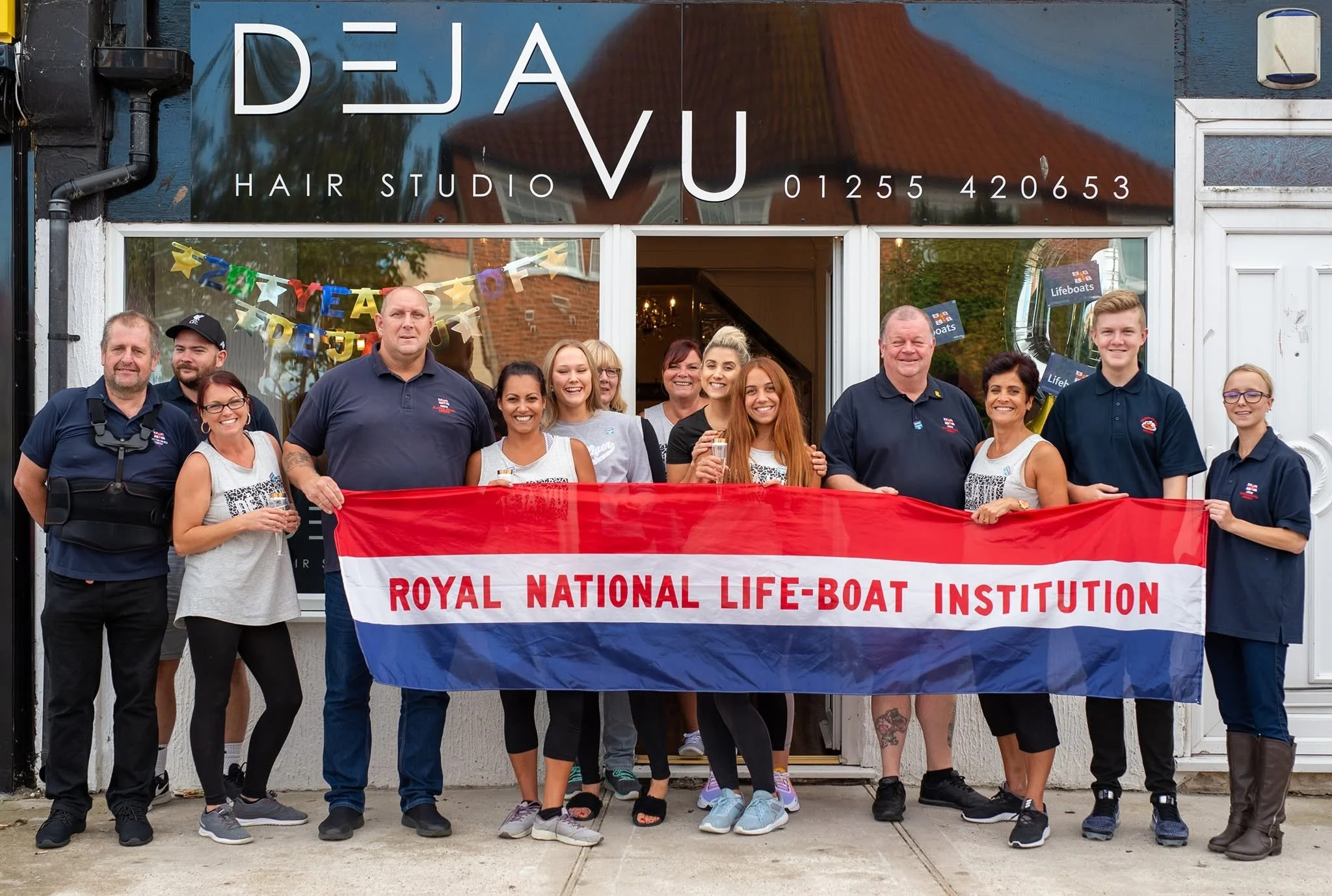
We did a rowing fundraiser for the local RNLI, we had a rowing machine in the shop and clients came in and sponsored us. We rowed from eight o'clock in the morning. The RNLI came in. We had a really fun day.
And then we did a sponsored swim. We had a client, Jo, who had motor neurone disease. She was a local girl, everybody knew her. She knew we were going to do the swim. But she died in November before. So we did it anyway at Christmas, in the sea. Her husband came, I went to school with him. Her two children turned up at the swim. We raised £1,500 in just a couple of weeks. The clients came to the beach. As sad as it was, that was a highlight. Those sort of things are sad but they bring people together.
What have been the highlights over those 27 years?
DINA: When we won the Gazette award that was really lovely. The girls and I were very surprised and overwhelmed. It was customers who went out of their way to vote. You can't buy that. It's quite a big achievement.
And my 25th anniversary. I invited staff, friends, clients. The amount of people who turned up with flowers, people I didn't expect to see, I was really overwhelmed. It made me realise the impact you have on people. That really touched me. That's the real return.
My grandson said to me once, ‘is your shop the best shop in town?’ And I said, well, ‘I wouldn't say that’. But there's not many hairdressers who can say they've had their shop for 27 years and it's consistent. That must mean something.
You're turning 60 this year. What does the next chapter look like?
DINA: I'm lucky that I can work Thursday, Friday, Saturday. They're really busy days. The other days are what I call my working days, banking, paperwork, the reps might come in. And I get one free day, Sunday. That's my day.
I get up really early in the morning and walk down to the beach for about an hour and a half. Or I'll be on my bike. That's where I think.
I am looking forward to slowing down a bit now, if I'm honest. But I could never go back to working for someone else now. The business is part of my identity. I've been doing this since I was 33. I think every year that goes by I think, how did I do that? I just go from year to year. And I love it.
And finally, what would you tell a woman who is thinking about starting something?
DINA: Just be nice to people. Your staff, your clients, your community. That's the main thing. I think that's why the girls have stayed so long and why clients keep coming back.
There was no big plan. Things just kind of happened and I went along with them. I try not to think about it too much. You'll make mistakes. You look back and think, I won't do that again. And sometimes you still do. You learn. Even now I still make mistakes. Some things don't change.