
Alison Burton, co-founder and operations director of March Muses, tells High Flying Design founder and editor Shannon Kate Murray why it took six months to get the skin tones right, and how a viral rant about retailers led to a pop-up in Selfridges.

Photo: Alison and Natalie, Co-founders of March Muses
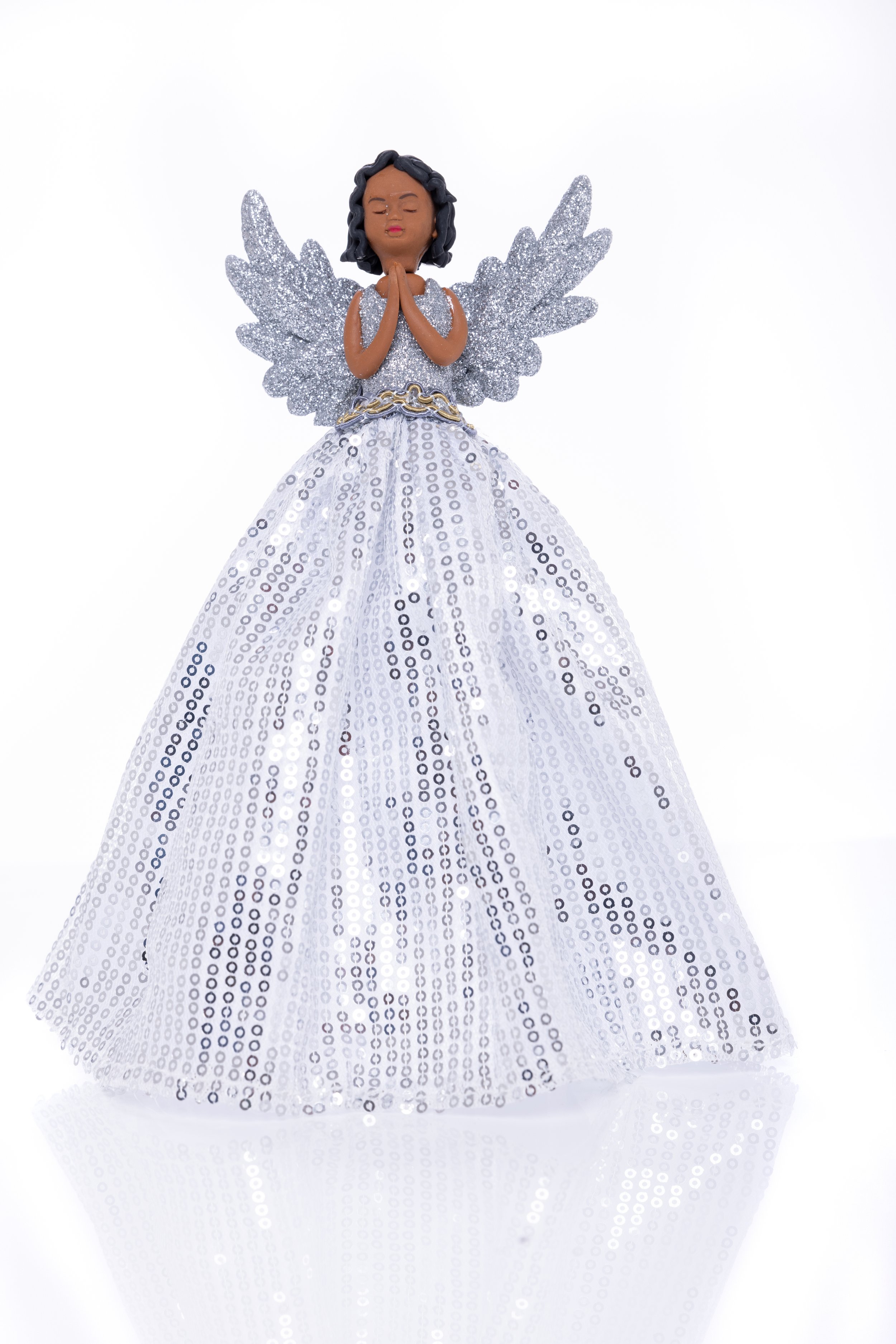
When Natalie Duvall's seven-year-old daughter asked whether fairies could be Black, the question caught Natalie off guard. She and her business partner, Alison Burton, went looking for a Christmas decoration that looked like their daughters, and came back with almost nothing.
So they made their own inclusive Christmas decorations. March Muses started in their kitchens and has since been stocked by Selfridges, Liberty and the Royal Albert Hall, and has a five-year licensing deal with Tesco. It has two Dragons behind it, and Alison has built all of it around a full-time job.
Before any of that, Alison had a very different dream.
As a child, when you were asked what you wanted to be when you were older, what was your go-to answer?
ALISON: I was a very active child, always singing and dancing, and my Grandad always used to say, "One day, you're gonna make me a star." When I turned four, my mum started taking me to dance and activity classes: ballet, tap dancing, acrobatics and also gymnastics. Based on this, my childhood dream was to be a ballet dancer.

Natalie's daughter asking "Can fairies be Black?" was the spark for the brand. What was your world like before that conversation changed everything?
ALISON: Natalie and I actually had two other businesses together before we launched March Muses, and have been business partners for over a decade. Based on my recruitment background and Natalie's theatrical background, we created an interactive careers workshop, which we would deliver in schools in and around London.
We also had our first Christmas business, delivering Elf visits, which was like a personalised Santa's grotto for children in their homes within the South East. An interactive experience, delivered by teams of actors dressed as elves, with lots of storytelling, personalised naughty and nice lists and gifts for each child. This was a very popular business and lots of fun, but it was a casualty of Covid, so we had to close that chapter.
How did you and Natalie meet? Who is she to you?
ALISON: Our parents have actually known each other since they were teenagers, so we have always been family friends. There is an 11-year age gap between us and I remember holding Natalie as a baby. I've known her all her life.
When Natalie told you what her daughter had asked, what made you think, "Yes, I want to do this with you"?
ALISON: It was like a light bulb came on and I questioned why we don't have these products in the UK. We have such a multicultural society in the UK, which meant so many people were not being represented at Christmas. Also, mixed-race heritage is the fastest-growing demographic in the UK, a statistic that shouldn't be overlooked.
You both searched and came up empty. What was that search process like? How long did you spend looking, and what did you find?
ALISON: In 2018, I took to the high street, searching in all the big retailers for Black Christmas decorations, and I couldn't find any. I did, however, find one in a local gift shop in Croydon and was so excited. But when I asked the shopkeeper where she got it from, she said it was a white one that she had painted black! She went on to explain that as a shopkeeper for 25 years, she too had never been able to source Black Christmas decorations in the UK.
Natalie did an exhaustive online search. Again, nothing was available in the UK, but they were available in the US and the shipping was very expensive. Unknowingly, we had stumbled across a huge gap in the UK market.
Neither of you had done this before. How did you go from "we should make our own" to having a product?
ALISON: As we already had the Elf visit business, we were used to working with overseas manufacturers, sourcing the gifts for the children. So, we put together a mood board, developing ideas and outlining what we would like our decorations to look like. We then contacted manufacturers to get samples produced.
The design process took around six months in total. As the manufacturers had never been asked to produce Black Christmas decorations before, the skin tones of our first samples were charcoal black. We did not give up. We reworded our request to the manufacturers, using words like urban and African American for them to understand the skin tones that we needed, and they delivered. When we saw our mood board finally come to life, initially with just six products, we were over the moon.
Did anyone tell you it was too niche, too seasonal, too small? What did people say when you told them the plan?
ALISON: Our friends and family had never seen Black Christmas decorations in the UK, so they were very excited, particularly our children. Their little faces and reactions seeing angel decorations with brown skin, afro hair, little girls with two bunches, and my daughter excitedly saying, "Mum, they look like me."
There were a few online comments from naysayers commenting that "this is just a seasonal business" or "who would buy these?" How wrong they were!
What's been the hardest part of getting March Muses off the ground that people probably wouldn't expect?
ALISON: The hardest part initially was the design process, as we knew we wanted a quality product range, something that we and our customers would be proud of. We were tenacious, and once we found our rhythm with the manufacturers we work with, creating products that we love, we haven't looked back.
For us, every day is still a school day, as there are many challenges in running a business: rising production and shipping costs, securing investment for growth, getting into retailers. The list goes on. But we accept the challenge.
You're still working full time as a Talent Acquisition Manager alongside all of this. Why, and what does a typical week look like?
ALISON: We are both single mums, so keeping the lights on at home and raising our children is the priority. I work in a senior-level role, and having my full-time job and income gives me the security I need whilst we build our business. Rather than paying ourselves a full-time wage, the majority of what we make goes right back into the business.
This also allows us to make very strategic decisions on how we grow, product development and who we partner with, instead of having a scattergun approach to business because we need to pay ourselves. A typical week is a huge juggling act: the 9 to 5, the 5 to 9 with children and family, and then the time beyond and the weekends to run our business.
Where are you based, and has building outside central London been a barrier or an advantage?
ALISON: We are both based in Croydon and building outside of London is a huge advantage. The power of social media has enabled us to have online customers UK-wide and globally. We also have online stockists in Sweden and Dubai to serve these customers locally, and having more global wholesale partners is an area we want to grow further.
What does your working relationship with Natalie look like day to day? Who does what?
ALISON: We have a very good working relationship and we make decisions together on everything, whilst playing to our strengths. We agree on how we spend, where we spend, product designs etc. However, I take the lead on the operational side and strategic planning for the business, and Natalie focuses on the creative side, including marketing and working closely with our designers and manufacturers.
Together, we pitch for investment and grants, attend trade shows and Christmas pop-ups, deliver entrepreneurial workshops in schools and handle the day-to-day activities of running the business.
This brand is clearly about more than selling Christmas decorations. How do you hold the emotional mission and the business reality at the same time? Does that tension ever get difficult?
ALISON: I think the two things have to sit alongside each other, because ultimately one enables the other. March Muses was created from a place of emotion, connection and a desire to make Christmas feel meaningful for all. That will always be at the heart of what we do.
But I'm also very aware that for the mission to continue, it has to work as a business. We have to make commercially sensible decisions, understand our customers, manage costs and think about growth. I don't see that as taking away from the emotional side, I see it as what allows us to keep doing what we believe in.
Of course, there are moments when it's difficult. There's always a balance between what you would love to create and what is realistic from a business perspective. Sometimes the heart wants to say yes to everything! But I've learnt that being thoughtful and considered is just as important as being creative.
Have you had moments where you've questioned whether it was worth it? What pulled you through?
ALISON: We work on all elements of this business throughout the whole year and not everything always goes to plan, which can be frustrating, and sometimes we have to pivot. Then when it gets to Q4, the busiest part of our year, our stamina is definitely put to the test with all the plates we're spinning. But we know what we're doing is so meaningful to so many people. So, although we're exhausted, with our tired eyes, we continue to push through to make the magic happen.
On your website, you say that seeing children's faces light up when they feel represented is magical. Where do you see that most?
ALISON: In the lead-up to Christmas we do many pop-ups and meet hundreds of customers and families at each event. When the kids, from all backgrounds, see our decorations, they marvel and are visibly excited. Seeing decorations that look like them, with their skin tone, or commenting that a decoration resembles a friend, makes them so happy. This is why representation and having inclusive products is so important, particularly in the season that brings so much joy.
Walk me through the decision to apply for Dragons' Den. Was it terrifying? What was the day like, what don't people see on the edit, and how did it change things?
ALISON: When we launched, there was so much excitement about our products and our turnover quadrupled in our second year of trading. We started to get in touch with big retailers to discuss being listed in their stores and the doors were being firmly closed on us. We'd already proven customer appetite for our products and were super frustrated that we couldn't get into stores. So, I suggested to Natalie that we should go on the Dragons' Den… I mean, what's the worst that could happen?!
We were invited to pitch and on the day there was a lot of waiting around. I went through a range of emotions: feeling super prepared, confident, then anxious, nervous, sweaty palms etc. Terrifying is the word I always use to describe the whole experience. We were in the Den for almost two hours. There was no break, no make-up touch-up, no checking your notes or an opportunity for a sip of water. Our pitch that aired on TV was just 13 minutes, so a lot of how much we were grilled was not shown.
Thankfully, we were victorious, gaining investment from Deborah Meaden and Peter Jones, so my audacious plan paid off. The opportunity for brand awareness was marketing gold. Our pitch aired in April, not exactly a prime selling moment for Christmas decorations, but our website almost crashed. The huge spike in sales was outstanding and a moment we'll never forget.
How did you go about getting stocked in Selfridges, Liberty and the Royal Albert Hall? What did it feel like for a product that started because you couldn't find it on any shelf in the UK?
ALISON: Getting into retail stores was not an easy ride for us and the approach has been different for each one. One of our social media posts ranting about the challenges of getting into big retail stores went viral, and on the back of that we were invited by the Buying Director at Selfridges to do a weekend pop-up in their Christmas shop in December 2021 (before our Dragons' Den pitch aired on TV). The pop-up was a huge success and we outsold all their other decorations during that weekend. We had to show and prove, and were then given the opportunity to become a stockist.
We sent a flurry of emails to Liberty in the hope of being stocked, but we didn't get a reply. Then, by chance, I was on a speaking panel and mentioned that Liberty was a store we'd like to be listed in, not knowing that someone from Liberty was in the audience. When I came off the stage, we had a chat and this person advocated for us on the inside. Soon enough we received replies to our emails and became a stockist. I also think that us being listed in Selfridges didn't go unnoticed and created a ripple effect.
The Royal Albert Hall was completely different… they contacted us and I nearly fell off my chair. The buyers had seen our products on social media and with no hesitation knew they wanted our products in their shops. When we launched in the Royal Albert Hall a few years ago, we were told that we are the first Black-owned brand to be listed in 125 years. Knowing this forever gives me goosebumps.
In 2023, we secured a groundbreaking five-year licensing deal with Tesco, nationwide. We started with Christmas decorations, cards, wrap and children's pyjamas. Our range then grew to reusable bags and products throughout the year, including a journal, make-up bag, jewellery box and toiletries bag. Working with Tesco is amazing. The teams are great, we're always learning and they fully support our ambitions for growth.
We are brimming with pride when we see our products on the high street. To think we went from launching so small in our kitchens, with our Black and brown decorations, to where we are now is huge for us.
You were crowned winner of the Consumer & Luxury Senior Leader category at the 2025 Black British Business Awards. What did that recognition mean to you?
ALISON: It was a moment of pride, gratitude and, if I'm honest, reflection. When you're building a business, particularly one that has come from such a personal place, you're often so focused on the work, the challenges and what still needs to be done that you don't always stop to recognise how far you've come.
Ultimately, the recognition gave me a renewed sense of responsibility. It reminded me that success isn't just about reaching a certain level, it's about what you do with the platform once you get there. For me, that means continuing to open doors, create opportunities, champion representation and make sure the next generation can see what's possible.
March Muses started because two little girls couldn't see themselves on a Christmas tree. Now you're going into schools and teaching young people to build businesses themselves. What made you take it in that direction, and what changes when you're in a room with them?
ALISON: We wanted young people to understand that building a business isn't something that belongs to somebody else. It isn't reserved for just people with money, connections or a particular background. An idea can start in a classroom, at a kitchen table or from something that frustrates you or something you wish existed.
And honestly, being in a room with young people is one of the most rewarding parts of what we do. Initially, you sometimes see a little hesitation. They might say, "I'm not creative," or "I wouldn't know where to start," or look around to see what everyone else is doing. But when they hear our journey into business, something shifts and you give them permission to think differently. Their imaginations open up and they start asking questions about products, customers, branding, money, marketing etc.
If we can help a young person believe they can build something, lead something and create their own opportunities, then we've done something much bigger than teaching entrepreneurship. We've helped change the way they see what's possible for themselves. And that is the legacy I want March Muses to build.
Do your own kids know what you've built? What do they make of it?
ALISON: Our children have been involved in our business from the very beginning, from getting their feedback on our initial samples when they arrived to them sharing ideas for new products and how they should look and feel. When we first launched they were so excited to see Black angels and decorations for the Christmas tree. Now, we show them a new design and their reaction is like, "OK, it's another Black angel, Mum," and this is the reaction we love. They now see Black angels as normal and not novelty.
Our children also feature in our social media marketing, adverts and photo shoots, which is so much fun, and we love to see them shine or show their creativity. They get a full-circle view of what it takes to run a business, from ideation to seeing a final product in its glory and beyond. As they got older they sometimes helped with inventory management, quality checking and fulfilling orders. However, this is getting harder now that they are teenagers, as their social diaries are busier than ours.
What do you hope your daughter takes from watching your journey?
ALISON: I hope my daughter takes away the belief that she can be anything she wants to be and that she never has to wait for someone else to give her permission to dream big or take up space.
I hope she also recognises that building something from an idea isn't always easy. There are challenges, moments of self-doubt, doors that don't open and times when you have to find the courage to keep going, even when you don't know exactly where the journey will take you. But I also hope she sees the joy in it. The joy of creating something that means something, of making a difference, of turning a problem into an opportunity and using your voice to bring about change.
We didn't start with everything figured out. We started with a feeling that something needed to change. Our little girls couldn't see themselves represented and we decided to do something about it. I hope that teaches her that she doesn't have to wait until she's older, more experienced or has all the answers to make an impact.
I want her to see that you can be a mother, have ambition, build a business, make mistakes, keep learning and still be completely yourself. And ultimately, I hope she grows up believing that there is space for her in every room she walks into, and if there isn't, she has the power to create that space herself.