
How to Use Your Wardrobe to Build Your Personal Brand
When a content creator argued that what you wear doesn't matter, Samantha Harman's followers all thought of her Vivienne Westwood choker. In this extract from her book Just Get Dressed, the personal stylist and author makes the case for equity dressing: using your wardrobe, one repeated choice at a time, to get seen, known and remembered.
This is an extract from my book, Just Get Dressed.
Sprawled across the sofa, having finished what was reportedly a family-sized pudding, watching the Great British Bake Off and judging like I know anything about food (except how to eat it), my phone pinged. And then it pinged again.
Several messages through the course of the evening and next day, all saying a variation of the same thing: Have you seen this video? Is it about you?
A content creator had made a video sharing their opinion on the idea of getting dressed for work. When it comes to such matters, each to their own; we live in a democracy and my opinion carries no more weight or importance than anyone else’s.
I do fear we’ve lost the art of discussion or debate; that we are pressured into taking a strong stance and sticking with it, even when new information comes to light. Nuance never existed in the online space when, ironically, nuance is all there is. You, your wardrobe, the things you believe or choose to see do not exist over there, or over there – they exist in the space between.

Photo: Samantha Harman wearing her Vivianne Westwood choker
In this video, the person was sharing their opinion that what you wear doesn’t matter. And in it, they referenced a specific item of jewellery. They referenced a Vivienne Westwood choker. Like the one I wear frequently. People sent me the video because they had made the association between the necklace, and me.
Let me tell you why I wear this necklace.
When I was studying for my degree, I worked a few jobs to make ends meet, including in two hotels. Whilst my friends were going out or sleeping in, I was going to work. I lived in two parallel worlds in the same city. I heard the privileged conversations of privately-educated students, funded by their parents so they could spend their spare time theorising (and partying). And then amongst the hospitality workers, many of whom were also here to study, or send money back home to their families.
I didn’t like the work at the hotels. It was physically demanding and there was a lot of pressure to turn rooms around as quickly as possible. But the people I worked with were wonderful and I learned a lot about the way the world works through conversations with them. We earned minimum wage, and we would usually have a minimum 11 rooms to clean per shift. If you had a day of only changeovers it was chaotic, and you’d generally only get through it on time because colleagues were kind enough to stay and help.
The hotels had regular guests because they were city-based and people were there for business. You learn a lot about human decency, respect, and class in a job like that. Because mostly, people look through you. Or pretend you aren’t there. But one particular regular guest always made a point of speaking to us. She always left a generous tip, held the doors open, and said thank you. She left an expensive scent in the halls when she walked them, which I deduced from her room (I wanted to be a journalist, of course I’m nosy) was Armani Code. In her room were designer clothes, including Vivienne Westwood, and Vivienne Westwood jewellery.
I had long made vision boards with images from magazines torn out haphazardly and taped together, and watched films and TV shows with women whose style I admired. But this was the first time in real life I’d come into contact with someone whose life I coveted. And it wasn’t about the trappings of success. Yes, the cared-for hair, perfume, and suits were aspirational, but many guests passed through the hotel with those things. It was her behaviour I admired most; that she had style and money and a busy career and she treated everyone, from me the housemaid to the manager, with the same level of respect. She saw me, the human, not me, the staff.
I made a promise with myself that I was working so hard now so that one day, I would have money and a successful career, and no matter what, I would never forget where I came from. I would treat everyone with the same level of respect, unless they proved themselves unworthy of respect (and that’s never happened with a cleaning lady, funnily enough).
The Vivienne Westwood choker isn’t just a pretty piece of jewellery or a way of showing off, and it certainly isn’t a symbol to say “look how much better than you I am, I got dressed.” It serves as a reminder to me, and symbolises what I stand for. It’s the illustration of a story – and now I’ve told you this story, you’ll remember it when you see the necklace.
That is how to use clothing for personal branding.
Who do you think of when you see that outfit?
At the mere mention of certain names, you think of certain outfits or items. Steve Jobs, whose style we earlier dissected, and his black turtleneck. Alex Hormozi and his vest and nose strips. Audrey Hepburn and the little black dress. Marilyn Monroe and the white halterneck. Carrie Bradshaw and her Manolos. Some of these were a moment-in-time that became lore. Others are staples. All of them were strategic choices – and repetition is key.
For one-time outfits that become part of culture, the repetition is in how many times you see it. For everything else, the repetition is in how many times it’s worn. If you saw Steve Jobs in a turtleneck once, it would have no bearing on the image that came into your mind when you read his name. But seeing it over and over formed an association.
Clothing helps you tell a story. If you’re starting out in business in a market everyone tells you is crowded, or you’re making a name for yourself in your industry, you can use your wardrobe as a tool to get seen, known, and remembered.
A late 2025 study showed that visual branding is ‘central’ to influence. It concludes that ‘Fashion serves as a nonverbal language that allows influencers to express individuality and emotional values. Elements such as colour, silhouette, fabric, and styling choices communicate messages that words often cannot.’
You can also borrow the established brand of a clothing item to change your image. Which brands or items have the kind of perception you want to create for yourself?
Let’s use Chanel as an example, because Coco was a master at crafting story through aesthetics. She understood that customers weren’t buying a bag, they were buying status; a feeling, a symbol, a legacy. The interlocking C symbol is one of the most instantly recognisable logos in the world. We all know what Chanel stands for, regardless of our interactions with, or relationship to, the brand. The enduring meaning of Chanel, which has long outlasted its founder, is testament to the commitment to a specific visual identity.
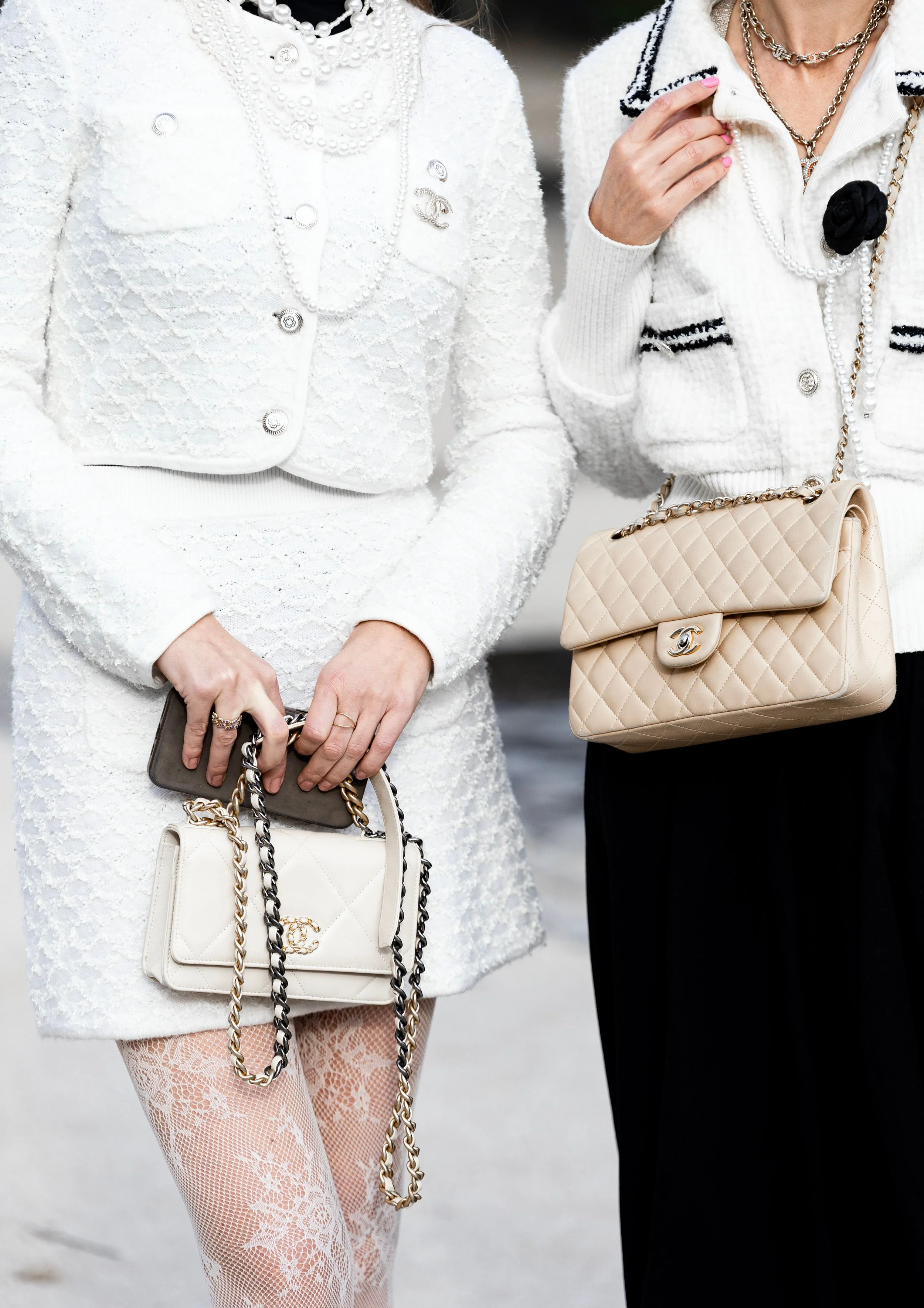
Photo: Filip Rankovic Grobgaard
Certain quotes attributed to Chanel, like “a girl should be two things, classy and fabulous” and “dress shabbily and they remember the dress, dress impeccably and they remember the woman”, mean that when you wear Chanel (or borrow the Chanel aesthetic), you are associated with those immortal words.
We wear our values
But a word of warning: when you stand for something and proudly inject that thing into your branding, customer loyalty relies on the maintenance of those values. If your values change or your perspective shifts, those customers will expect an explanation.
Chanel has come under fire in recent years for what shoppers consider to be a decline in quality. As we explored earlier, a decline across the board happened as fashion cycles sped up, social media changed the way we shop, and the economy fluctuated. But when your brand stands for timeless and enduring quality, you better make sure those factors don’t impact your reputation.
The apparent decline in quality at Chanel has led to some critics and fashion content creators dubbing it “Zara for rich people.”Fashion and culture journalist Amy Odell asked the question: ‘The Chanel brand has been confused for a while, maybe since Lagerfeld died in 2019. Does it want to be high-end Zara – or Hermès? Can it be both?’
Writing in the New York Times, fashion editor and lecturer Katharine K. Zarrella said: ‘Many luxury houses have broken the principles that made them so successful. These hoity-toity brands, which cheapened their essence and eviscerated their desirability with down-market celebrity partnerships, licensing deals and influencer advertising, have no one to blame but themselves.’
She suggested that brands like Chanel have cheapened themselves by going after the lower end of the market with diffusion and keyrings. ‘We are mere minutes away from a Chanel- and Gucci-packed outlet store popping up in a midtier strip mall near you,’ she added.
After the pandemic, these brands hiked their prices ‘so the “wrong” people stop buying,’ said Erez Yoeli, a research scientist at MIT’s Sloan School of Management, in the same article. But part ‘of the pressure in the marketplace comes from the fact that you do have to be legitimately better,’ he said. ‘And if you’re not, you’re going to suffer the consequences.’
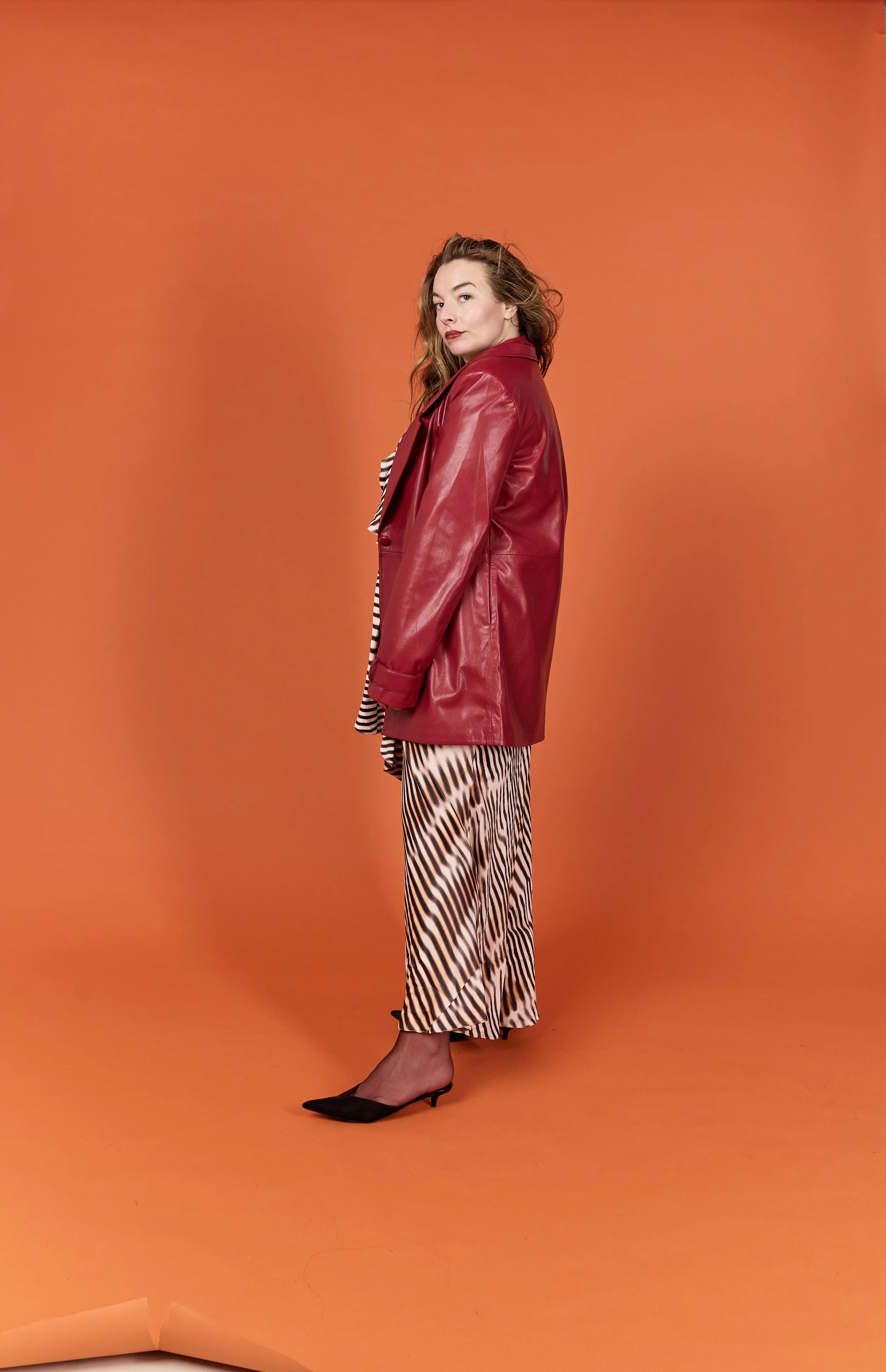
Photo: Samantha Harman
Branding is no longer simply for big brands; it’s about the way you’re perceived by your colleagues, customers, and the wider community. The compound effect of utilising your wardrobe on a daily basis to cement your brand story is what I call equity dressing.
Put your wardrobe to work: start here
Here’s how you can start thinking about using your wardrobe as a personal branding tool.
If there was a phrase or slogan you’d like someone to think when they see you, what would it be? What does that phrase or slogan look like? Are there specific colours, styles, or items that you could use to say it without words?
Do you have any stories attached to specific pieces of clothing that match your values, business, or aspirations? Write out those stories.
Are there any brands that match the way you’d like to be perceived?
If you were to look at your current personal brand in comparison to what you’d like it to be, what needs improvement?
Pick out the key themes or things to repeat in your style that will create alignment between you and that brand’s perceived value.
What is the hill you will die on, and what would you never compromise on?
What standards do you want to be known for, and are these truly reflected in your style?