
Why “Working From the Beach” Is the New Hustle Trap
Nearly 65% of UK workers hit burnout in 2024. Danielle Thompson, founder of Goldspun Support, argues the "work from anywhere" dream isn't the cause of that number, it's a symptom of it, and she knows what freedom actually looks like instead.
Forget the glossy reels of laptops on sun loungers, palm trees swaying in the background, and cocktails with tiny umbrellas.
The “working from the beach” fantasy looks like freedom, but it often feels like pressure. Pressure to succeed, to do more, to do it all. And when we inevitably fail to live up to these impossibly high standards, it has a real impact on us.
Sitting on a beach with your laptop doesn't automatically equal a life of balance, calm, or joy. For many women, it's the opposite, with patchy Wi-Fi, screen glare, overheating devices, and emails piling up while you're nagged by the thought that you should be enjoying yourself more.
That's why I want to be more honest about freedom and success for women. The "work from anywhere" dream isn't the destination we've been promised. True freedom isn't about dragging your laptop everywhere. It's about building a life and career that let you step away completely, without guilt, burnout, or chaos when you return.

The beach dream is more pressure than pleasure
Let’s unpack this “beach hustle” fantasy. The aesthetic sells us an idea that we can have it all. And the all refers to a thriving career, the flexibility to travel, and the ability to look perfectly put together while doing it, not to mention running a home and family, staying healthy, and finding me-time.
But that’s the trap.
When women are told that freedom means working from a beach, what we’re really being told is that we need to be productive everywhere. That there’s no space for switching off. That if we aren’t using every moment, even on holiday, to get ahead, we’re somehow failing.
The result? More pressure, more guilt, and less joy.
Nearly 65% of UK workers experienced burnout in Summer 2024, which is more than 16 million people, and an 11-point rise since 2022. Women are the ones who are hit the hardest: in one survey, 69% of women reported workplace burnout, with 18% saying they’d felt stressed at work every day for three months, double the rate of men.
So, if the “dream” of working from a lounger leaves you feeling even more stressed, you’re not imagining it.
The invisible load just got heavier
Women already carry invisible loads, at work, at home, and socially. We’re expected to be high-performing professionals and perfectly present partners, friends, mothers, daughters… and so much more.
The “CEO on the sand” narrative piles another layer onto this: be glamorous, be flexible, be free but don’t forget to stay visible, keep hustling, and never drop the ball.
Ambition isn’t the problem. Ambition is brilliant! The problem is that this glossy narrative stops us from building the very thing we crave: autonomy and true freedom.
What freedom actually looks like
True freedom isn’t about where you’re sitting when you open your laptop. It’s about whether you can close it and walk away, without the stress or worry.
Here’s what genuine autonomy looks like:
Boundaries: Being clear on when you’re available and when you’re not, and sticking to it.
Systems: Automations, processes, and tools that keep things running even when you’re offline.
Strategic Support: People around you, a team, a VA, mentors, who can step in so you don’t have to do everything yourself.
This is especially important for remote workers, who are statistically more likely to be stressed. Gallup found that 45% of fully remote workers experienced “a lot of stress” the day before going away, compared to 39% of on-site workers. Freedom isn’t about taking your stress to the beach, it’s about setting things up so you can leave work behind altogether.
Practical steps to build real freedom
So how do we get there? Here are some of the steps I recommend to my clients and use myself:
Audit your energy and workload
Take one week and write down everything you do, both work and life admin. You’ll be shocked how much is draining your time and energy. Then ask yourself: what could be automated, delegated, or even deleted entirely? The goal isn't to find more hours. It's to find out where your hours are going.
Design your non-negotiables
Decide what time off looks like for you. Is it evenings without email? A full day each week offline? Set the rule and protect it like the precious thing it is.
Start with micro-absences
If you’re scared to take time off, start small. Block two hours on a Friday, put on your out-of-office, and see what happens. Gradually build up to longer breaks. Most founders discover the world didn't end, and that's the proof they needed.
Create a visibility strategy
Part of the pressure comes from feeling like you need to be seen everywhere, all the time. Pick the platforms, meetings, and opportunities that actually matter and give yourself permission to ignore the rest. If you're struggling to be seen on your own terms, this is where to start.
Build a support net (or network)
Freedom doesn’t mean doing everything alone. Whether it’s hiring an assistant, sharing childcare, or simply creating better systems, invest in the help you need to keep things running without you.
My own shift
A few years ago, when I was in the depths of running my business, I was the poster child for hustle culture. I was working 12-hour days, seven days a week and burning out regularly. Not to mention secretly wondering if “freedom” was just for other people.
Everything changed when I realised that what I really wanted wasn’t to work from anywhere or to live up to the glossy images online, it was to be able to stop working without everything falling apart.
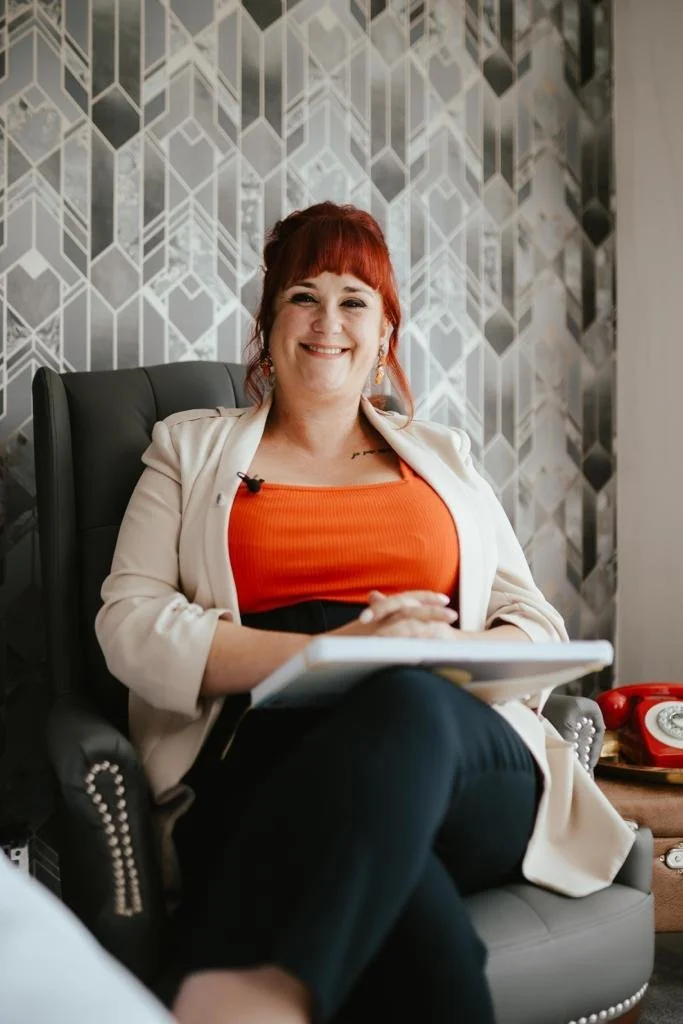
I restructured my business, put systems in place, hired support, and got ruthless about what I said yes to. I had run my business for 8 years before I took a holiday without taking my laptop with me.
Today, I can take a full week off, knowing my clients are supported, my business will keep running, and I’ll return refreshed instead of overwhelmed.
Eight years is a long time to wait for that. But the thing my story actually proves isn't that burnout is inevitable for women in business, it's that the exit from it is structural, not motivational. You don't think your way out. You build your way out.
That's the version of freedom worth working towards.